
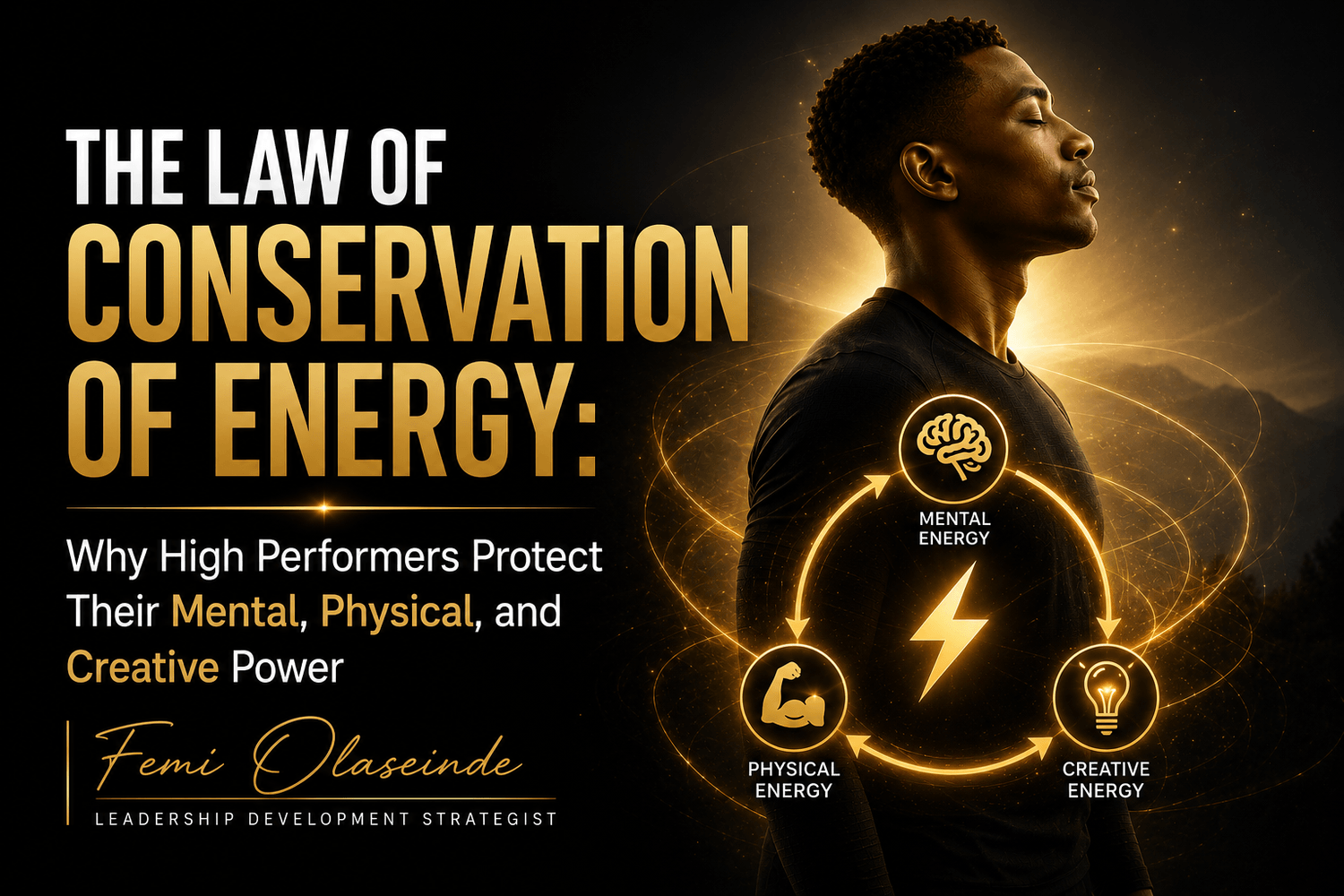
The Law of Conservation of Energy: Why High Performers Protect Their Mental, Physical, and Creative Power
For any action to be carried out, energy is required. Perhaps that’s why energy is defined as the ability to do work.
In elementary science, we were introduced to a foundational principle: the law of conservation of energy. It states that energy can neither be created nor destroyed—it can only be transformed from one form to another.
At the time, it felt like just another concept to pass an exam. But in reality, it is one of the most profound frameworks for understanding not just physics. It helps to understand performance, productivity, and ultimately, self-leadership.
When you step back and think about it, you’ll realize that your life is nothing more than a daily expression of how you convert and expend energy.
Energy Is Not Just Physical. It Is Personal
We often reduce energy to physical strength—the ability to move, act, and exert force. That’s the most visible form, and perhaps the most celebrated. In fact, hard work is often associated with how much physical energy you can exert into a given task per time. It’s also the reason why people who were trained and conditioned to work hard often see “smart work” as unrealistic or ridiculous.
This is not to in any way imply that hard work is bad nor glorify smart work. I believe the context determines when to use one or the other, or both. In fact, I believe you should optimize for both at all times.
As an individual, your daily life is powered by multiple forms of energy:
Physical Energy: The ability and strength to do active physical things and the feeling that you are full of physical power and life. This is the energy you spend when you require physical energy to get things done.
Mental Energy: The ability or willingness to engage in cognitive work. Often, this type of energy is described as a mood or state in which you feel productive, motivated, and prepared to get things done. It is basically your ability to think, focus, decide, and solve problems.
Creative Energy: The ability to invent and develop original ideas. This energy type is intrinsic. You may describe it as the passion and mental enthusiasm that fuels imagination. This kind enables the generation of new ideas, problem-solving, and artistic expression.
Each of these energies plays a distinct role in how you show up, perform, and lead your life. And whether you are aware of it or not, you are constantly spending them.
The Unconscious Leakage of Energy
Most people are trained and programmed to respect physical effort. We’re taught to work hard, push harder, and stay busy.
But very few people are trained to manage their mental and creative energy with the same level of discipline.
While physical energy is visible, mental and creative energy are subtle—and therefore easier to waste. Unconsciously, you leak your energy through:
Endless scrolling, which drains your mental clarity.
Reactive living, which depletes your focus.
Constant distractions that fracture your creative flow.
Paying attention to things that add no real value to you and contribute to the achievement of your goals (and visions).
And because energy cannot be destroyed, but only transformed, here’s what happens: Energy that could have been invested in growth, leadership, or innovation gets converted into distraction, stress, and stagnation.
Self-Leadership Begins with Energy Awareness
At its core, self-leadership is the ability to take responsibility for how you show up in the world. It is the art of living your life in such a way that it aligns with your identity, the essence of your being (purpose), and who you truly are. Basically, self-leadership is the act of leading oneself to a desired destination.
And you cannot truly lead yourself if you are careless with your energy. This is because your results are not just a function of time. They are a function of how well you allocate your energy across what matters most.
It is the difference between an average person and a high performer. High performers ask questions like:
Where is my energy going?
What is draining me unnecessarily?
What deserves my highest-quality energy?
In summary, they are energy aware. And this level of awareness is what separates motion from meaningful progress. It separates efforts from results.
Conservation as a Strategy for Performance
If energy cannot be created, then your advantage in life does not come from doing more. It comes from wasting less energy and directing (or channeling) it towards what matters.
This is where the conservation of your energy becomes a leadership strategy. Note that conserving your energy is not about doing less. It is about doing less of what doesn’t matter so you can do more of what does.
It means:
Protecting your mental space from the noise and distractions of the modern world.
Guarding your creative cycles from interruption
Using your physical (and other) energy with intentionality.
You need to understand that every unit of energy you misallocate is a missed opportunity to make an impact.
The Discipline of Energy Investment
If you truly want to operate at a high level, you must begin to see your energy as a form of currency.
And like all currencies, it must be:
Earned through rest, recovery, and alignment
Spent on priorities that matter to your vision
Protected from unnecessary drains.
At the end of the day, your life is not defined by how busy you are. It is defined by what your energy produces.
Final Thought: You Are an Energy System
The law of conservation of energy teaches us that energy never disappears. Rather, it only changes form.
The important question to always ask yourself is: What is my energy becoming? Is it being transformed into progress, growth, and impact? Or is it dissolving into distraction, exhaustion, and unfulfilled potential?
In conclusion, self-leadership is the discipline of ensuring that your energy consistently transforms into outcomes that matter. When you learn to conserve, direct, and optimize your energy, you become productive and powerful. You become a high-performer.
SHARE


Subscribe to Seasoned Letters w/Femi Olaseinde
Sign up for our newsletter to get the most interesting stories of the day straight to your inbox before everyone else
Created with ©systeme.io• Privacy policy • Terms of service